Summer 2026 has brought a challenging combination of high travel volumes, severe weather, capacity constraints and other operational disruptions. Industry reporting has described a summer of widespread air travel disruption, with weather and capacity pressures continuing to affect airline networks.
At Atlas Travel, we're seeing that disruption play out in our own traveler data. And while no travel program can prevent every flight delay or cancellation, the data shows why being prepared to respond can make a meaningful difference.
When Travel Volume Rises, Disruptions Rise Faster
In June, Atlas travelers took 22,450 trips, up 18.7% from May's 18,920 trips. During the same period, disruption events increased from 3,215 to 4,120, a 28.2% increase, meaning disruptions grew roughly 1.5 times faster than trip volume as summer travel picked up.
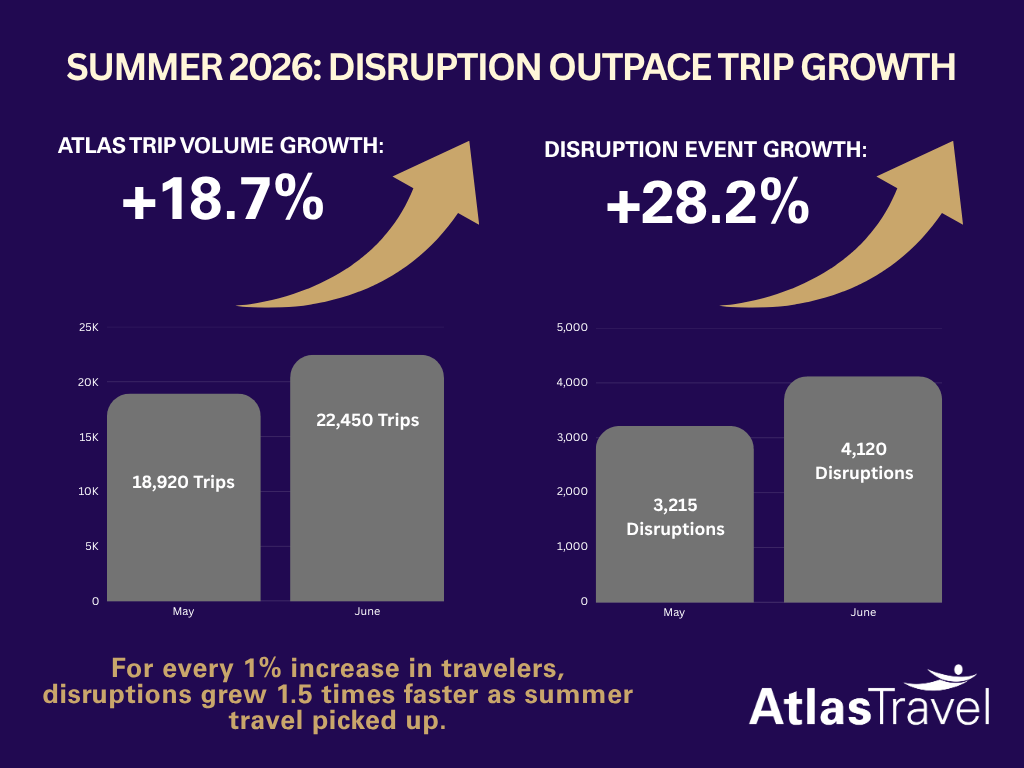
That difference is particularly notable as travel volume reaches peak summer levels. June 19 marked the highest single-day travel volume in the data, illustrating the increased pressure that peak travel periods can place on the broader travel network.
For business travelers, that difference matters. A disruption isn't simply a delayed flight; it can mean a missed connection, a missed meeting or an itinerary that suddenly needs to be rebuilt.
One Disruption Can Quickly Become Many
The impact of disruption also isn't evenly distributed across the travel network. In Atlas' tracked data, Boston Logan International Airport (BOS) recorded 83 flight cancellations, which ultimately contributed to severe rippling effects in the Northeast hubs, including LaGuardia and Newark.
For example, a BOS-to-LGA flight had a predicted delay of up to 582 minutes, compared with a typical regional delay of approximately 45 minutes, meaning a disruption of that scale can quickly turn a single flight into a much bigger itinerary problem.
Our data also showed that anticipated trouble at major hubs can impact traveler behavior. London Heathrow recorded 53 traveler-initiated cancellations, while Doha recorded 27, suggesting that some travelers chose to abandon problematic routings rather than risking a bottleneck.
The Earlier We Know, the More We Can Do
One of our more notable data findings is the timing of cancellations. Of 1,750 tracked flight segments, 505 were canceled, representing a 28.9% cancellation rate, close to the 28.4% seasonal average. This suggests the bigger story isn't the volume of cancellations, but when cancellations happen.
Among 144 recent major cancellations, 26.3% or 38 flights occurred more than 48 hours before departure. In this sample, 78.2% of Atlas travelers affected by advanced cancellations were successfully reaccommodated — nearly four out of five travelers.
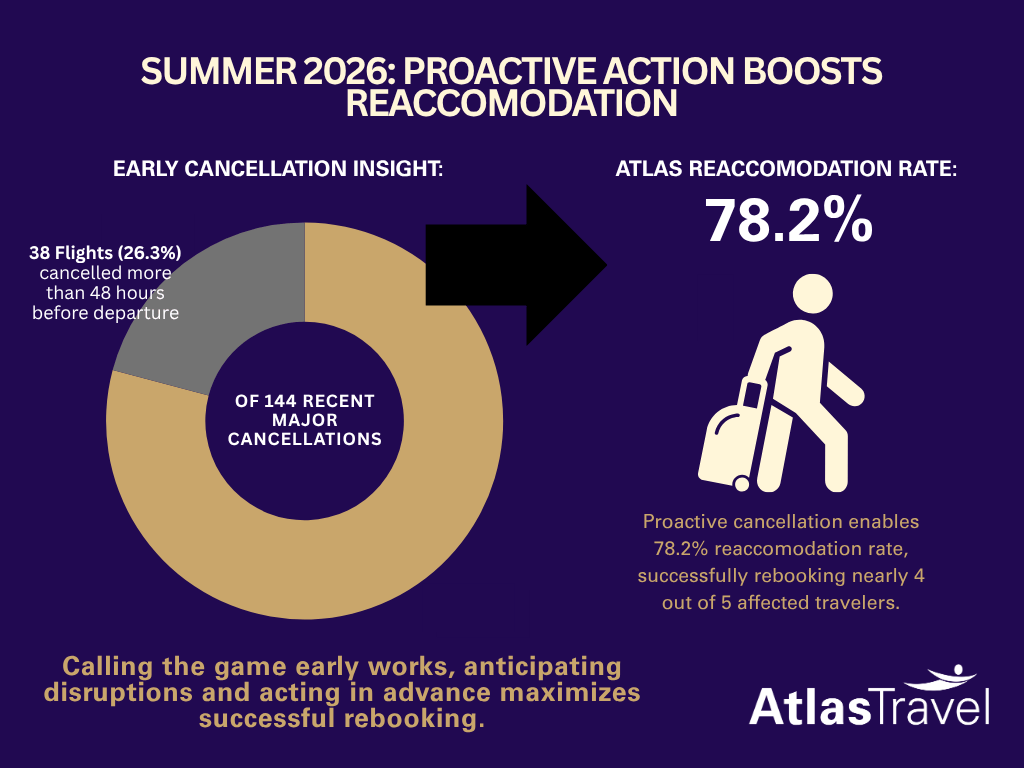
This advance notice creates an opportunity to act before a traveler leaves for the airport and allows advisors to proactively find alternative itineraries. Instead of discovering a cancellation at the airport and scrambling for the next available option, travelers can have a new plan in place before the disruption even occurs.
Turning Disruption Into a Manageable Travel Experience
This is where Atlas Travel's combination of technology, data and human expertise comes into play. Our advisors can monitor changing travel conditions, identify schedule changes and cancellations, evaluate available alternatives and help travelers adjust their plans when the original itinerary no longer works.
For travel managers, Atlas also provides greater visibility into disruptions affecting their travelers. That helps them understand where issues are occurring and respond across the program rather than leaving individual travelers to solve problems on their own.
Technology can help identify changes quickly, while our advisors bring the experience and judgment needed when there isn't an obvious answer. Together, those capabilities help Atlas move from simply reacting to disruption to helping travelers get ahead of it.
Delays and cancellations aren't going away. Weather will happen, flights will change and airports will experience congestion, but what businesses can control is how they respond.
At Atlas Travel, we're focused on helping businesses keep their travelers moving when plans change, with the data, technology and people needed to find a path forward. Because when the original travel plan no longer works, having a trusted partner who knows what to do next can make all the difference.



.png?width=520&height=294&name=2.2026%20Hero%20Images_800x418%20(2).png)